
Qatar Ultra Runners
Our Story
We did not create Qatar East to West. It created us.
The Beginning
In the summer of 2017, while four young men were having a Yemeni breakfast in a Doha restaurant after their Friday morning run, one runner, Abdu Ghanem, went “You know, my friend Stefan just ran from Dukhan to Doha, it was around 90km. I think it would be cool if we can attempt the same thing, but from the east”.
The three other guys, Islam Sallam, Hesham Shaban and Hamza Ghonim, went “YEAH, right…”
Convincing the three other runners wasn't a tough job as they had no clue what they were doing at that point. Neither did Abdu.
The newly formed team started spreading the word among their running friends from DBRC (Doha Bay Running Club), and surprisingly a considerable number of runners showed interest — guess they too had no clue what they were doing.
DBRC was the biggest and the oldest running club in Qatar, founded in 2011 and still running strong.
Eventually the total number of interested runners reached 50, which made the original four think: well, we can't run now, as these 50 people will need support and security during their uncalculated attempt to run across the country. Which was kind of a relief, since supporting runners through a 90km run doesn't take as much fitness as running it. How hard can it really be to hand someone a banana?
Trying to Make It a Race
For the following four months the team tried to make it an official event and get some sponsors interested, but the idea was still too young and too unfamiliar to be trusted and supported. Ultra running as a sport wasn't very popular in Qatar at the time, so sponsors — understandably — didn't see a point in supporting such an idea.
The team had a decision to make. Call the whole thing off, or go forward with it as a “friendly” run?
Driven by the love of adventure, the baseless belief that this challenge had the potential to become something big one day, and the growing interest in the running community, the team decided to go forward and hope for the best.
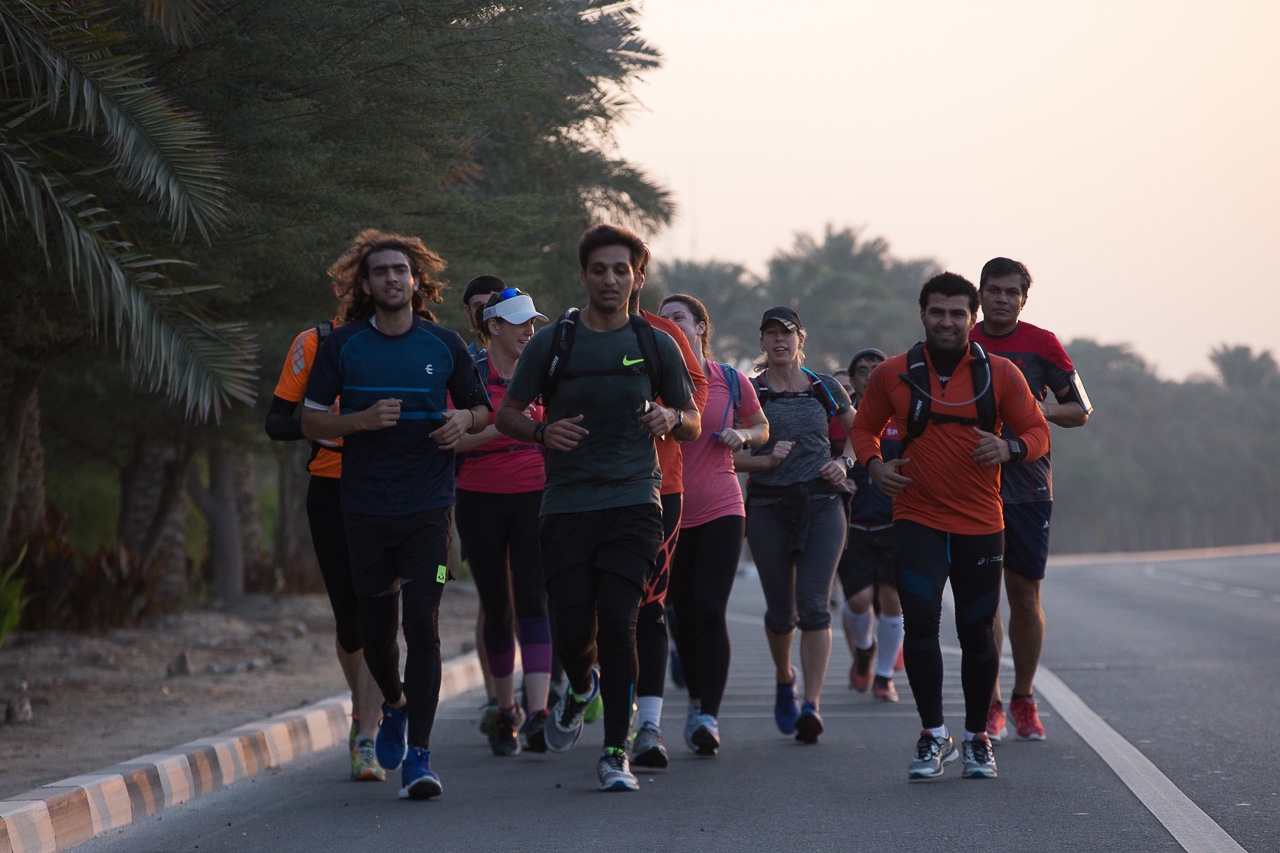
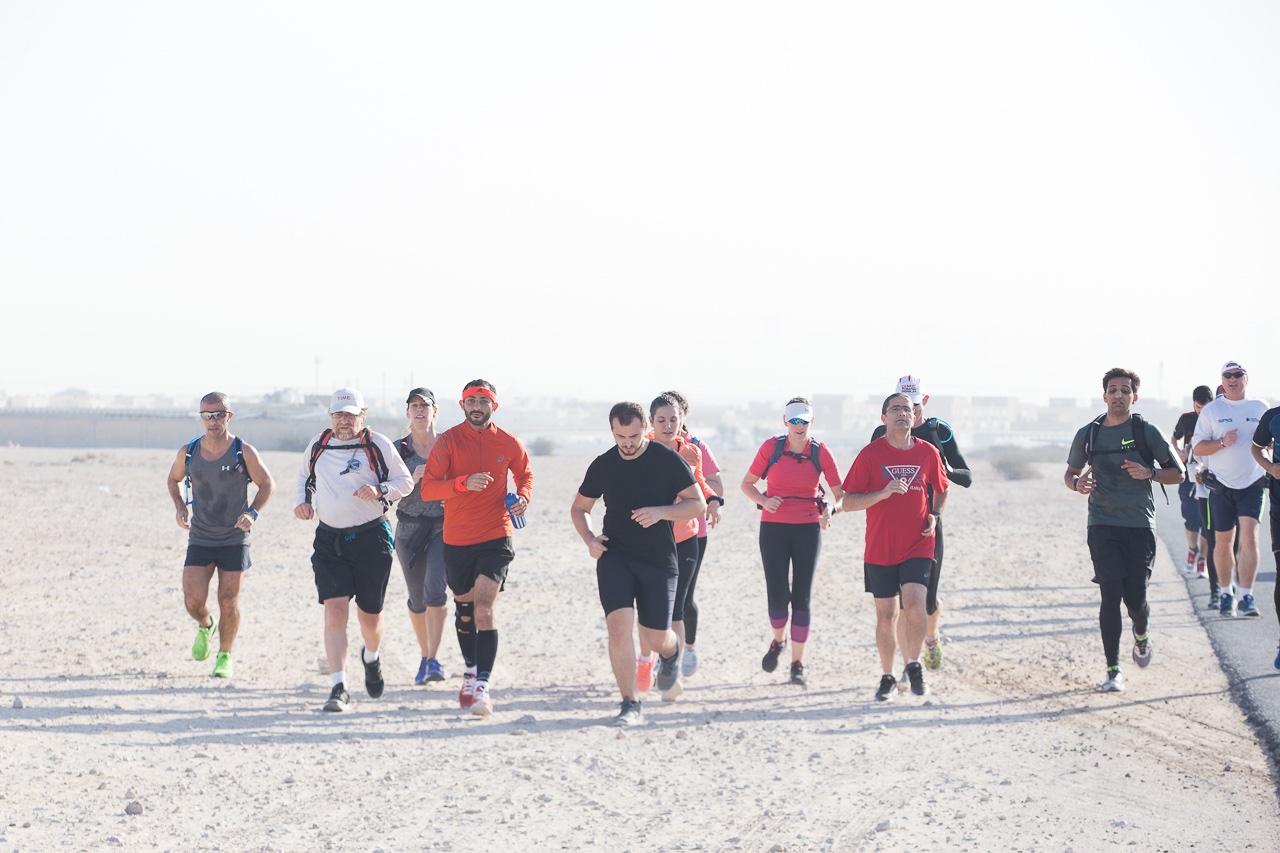
They also decided that all the runners would run together for as long as possible, to make it easier for the “organisers” to manage the race with the little logistics available. That wasn't great news for the runners — you don't want to stick to someone else's pace for 90km — but they agreed anyway.
After it became clear it wasn't going to be an official race, almost half of the people who had originally signed up dropped out. The unpleasant news wasn't all bad for the organisers, since it meant the job became slightly easier given how little experience they had.
The Route and The Date
The next challenge was to design the route. Even though you can run the 90km in a straight line from beginning to end, the team thought it wouldn't be safe for 25 runners to run together on the main roads of the city — and at the same time they didn't want to attract too much attention, as the last thing they wanted was the run being cancelled for interrupting traffic. So they took some detours, which meant an 8km off-road stretch behind what later became Mall of Qatar, reaching Dukhan Highway a few kilometres before Shahaniya, the next city west of Doha.
They also decided to start at 5am on the 15th of December 2017, a Friday, when traffic inside Doha is at its lowest.
Finances
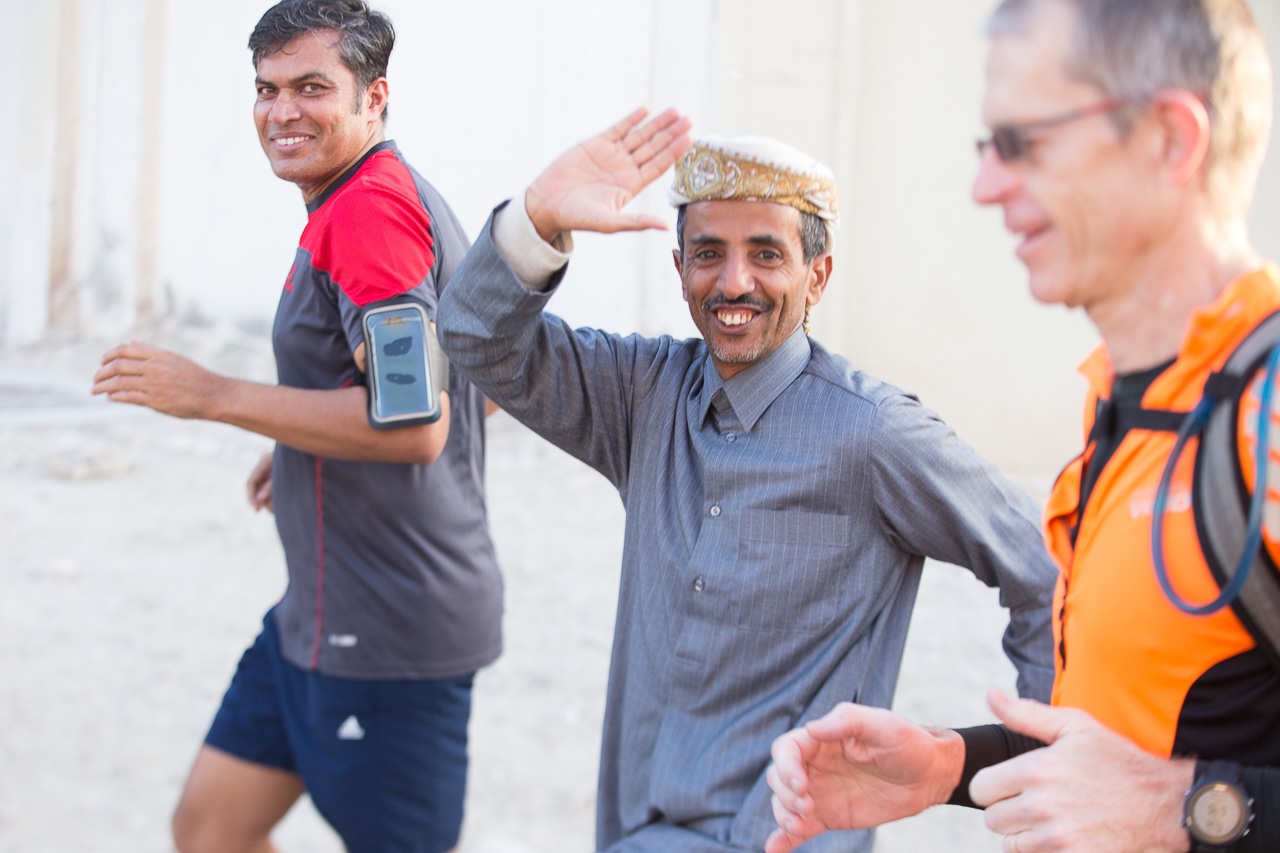
There were no registration fees for the challenge — the team felt guilty charging people who were going to run such a long way. But runners voluntarily contributed to the cost, a beautiful gesture that showed the true nature of runners. Well, soon-to-be ultra runners.
Volunteers
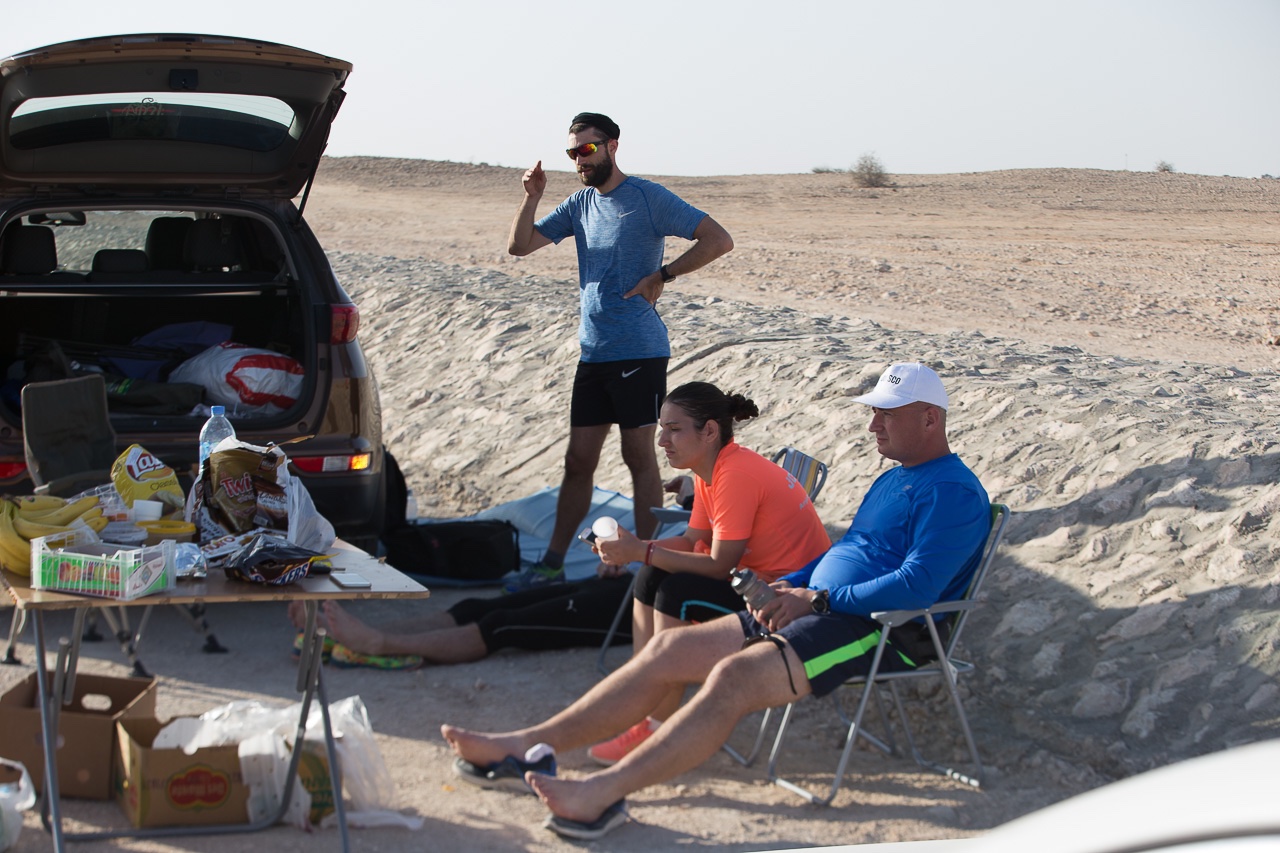
Running such a long distance wouldn't be possible without volunteers to set up aid stations, provide medical care, and pick up runners who might not be able to finish. The organising team reached out to the running community and to their own non-running friends, and eventually formed a team who were an essential part of the challenge's success.
It was amazing to see volunteers who had never run in their lives going out of their way to spend a weekend in the desert supporting people they had never met, accomplishing a goal they couldn't really comprehend when they first heard about it. Another reason the world of running is very special.
The Day
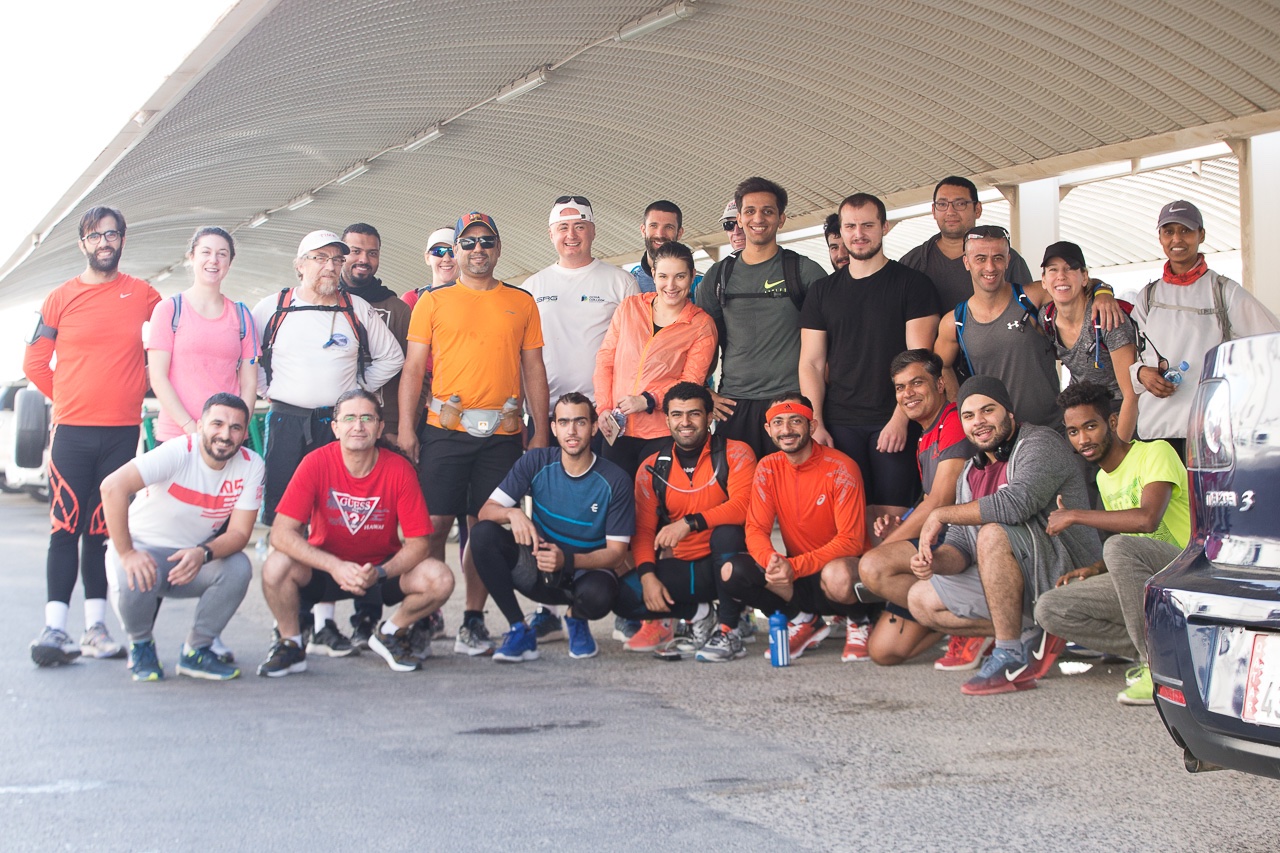
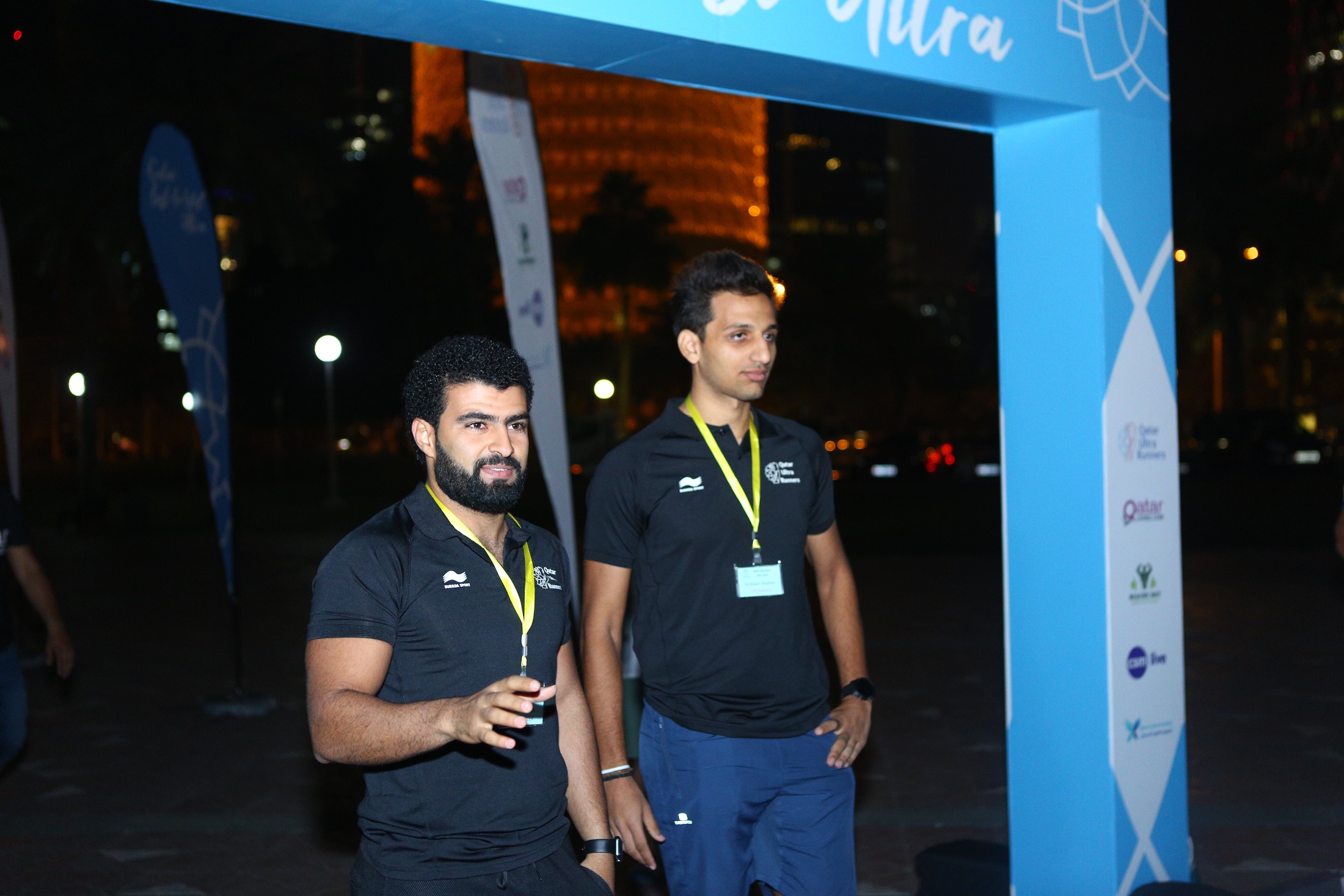
On Friday the 15th of December 2017 at 4:30am, 25 runners stood outside Costa Cafe at Doha Corniche getting ready to do something they had never done before. Those 25 were the seed of what later became the first ultra running race in Qatar — the Qatar East to West Ultramarathon, usually referred to as QEW.
At 5am, all the runners, volunteers and organising team started a very long day that didn't end until 10:45pm, with the last runner reaching the western coast of Qatar at Dukhan Beach.
Not only did the people involved that day plant the seed for the biggest running event in Qatar, they also made friendships and memories that will last forever.
It Wasn't Supposed to Happen Twice
The friendly run was a one-off. Nobody had planned a second one. But by the time the last runner reached Dukhan Beach that night, enough people were asking the same question — when are we doing this again? — that the team didn't really get a choice.
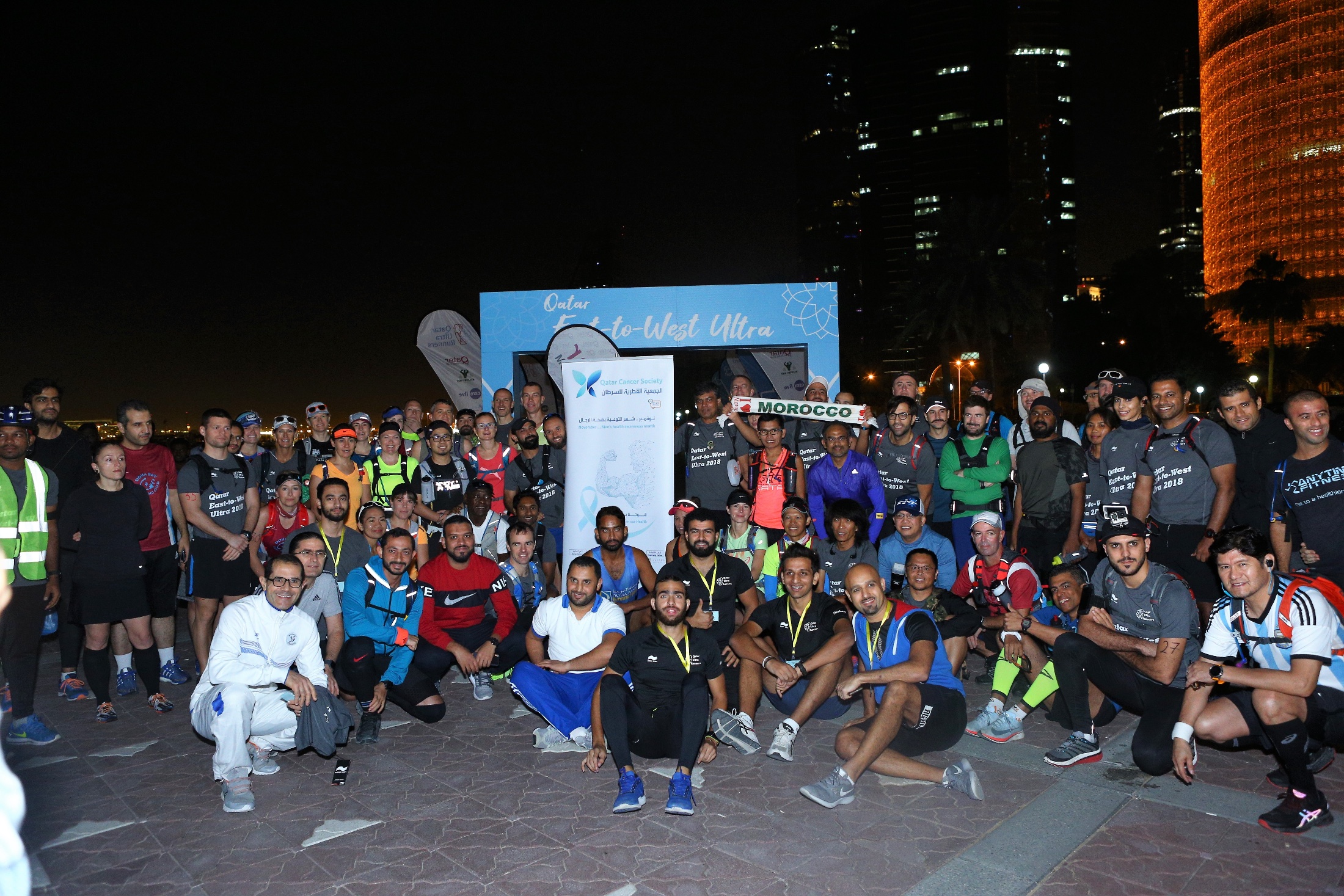
In 2018 it came back, this time as an actual event. Permits. Proper aid stations. Medical cover. A start line at Sheraton Park instead of the pavement outside a coffee shop. The sponsors who couldn't see the point a year earlier started replying to emails, and most of the runners who had dropped out when it stopped being a race came back to run it.
What didn't change was the shape of the thing: 90km from the eastern coast of Qatar to the western coast, five main aid stations in between, and a cut-off generous enough that a first-time ultra runner walking the final stretch still reaches Dukhan Beach in time for the sunset.
Nine Editions
Twenty-five runners crossed the country in 2017. When it came back the following year as a real race, 95 lined up.
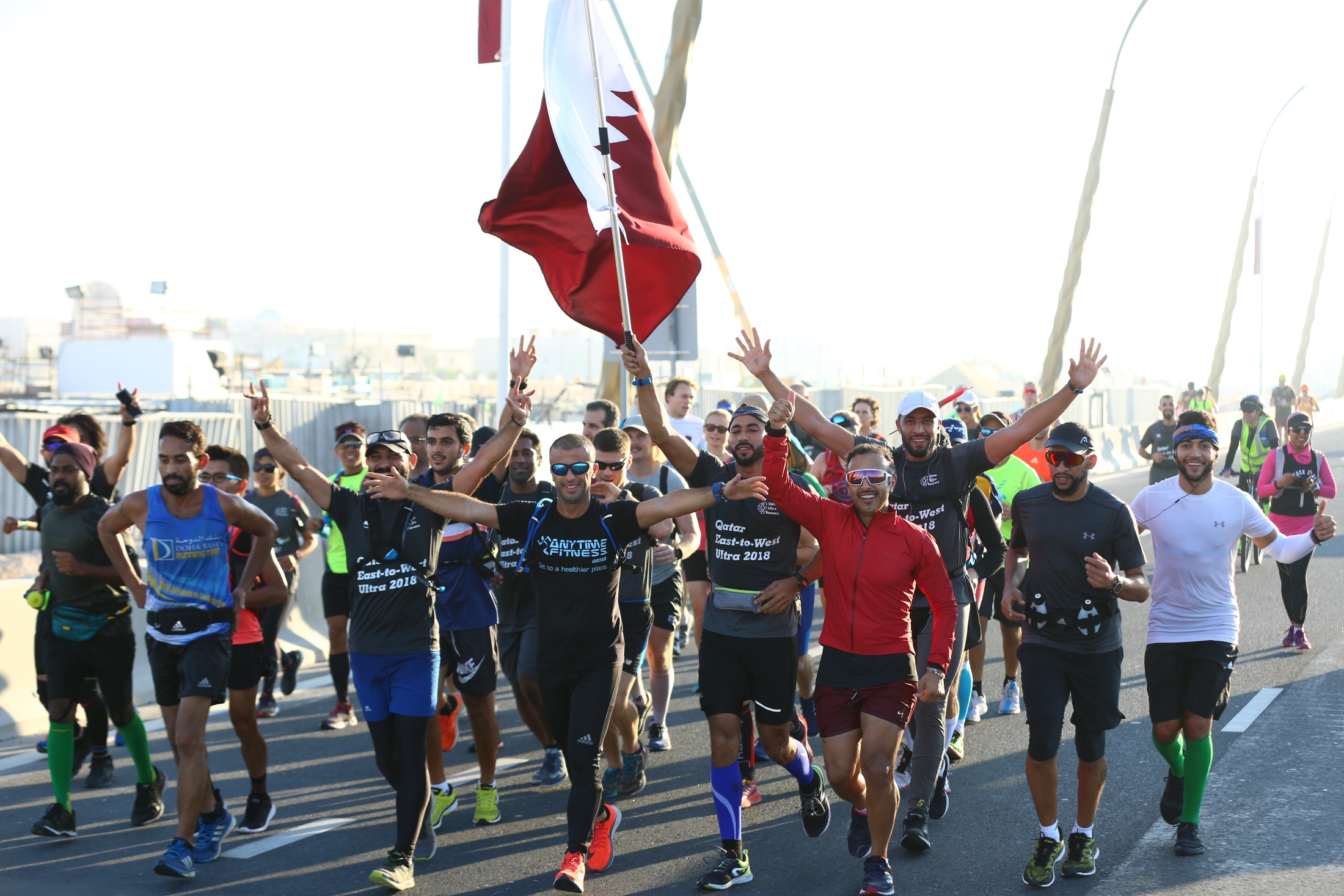
In 2019 the race stepped up again, run officially in partnership with Qatar Sports for All, and 264 runners took part. From there it kept climbing: 398 in 2020, 650 in 2021, 748 in 2022, 990 in 2023, 1,500 in 2024 and 1,800 in 2025 — with around 2,500 expected in 2026.
From 2022 the start line stopped being a purely local one. Runners began travelling to Qatar specifically to race QEW, and by 2025 around 150 of the 1,800 had flown in from abroad.
The numbers are not really the point, though. One thing has held since the first crossing: the last finisher gets the same welcome as the first. That was true in 2017, when the welcome was four exhausted organisers and a volunteer with a box of bananas, and it is still the thing the entire event is built around.
More Than One Race
Qatar Ultra Runners is a licensed events company now, and QEW is no longer the only date on the calendar.
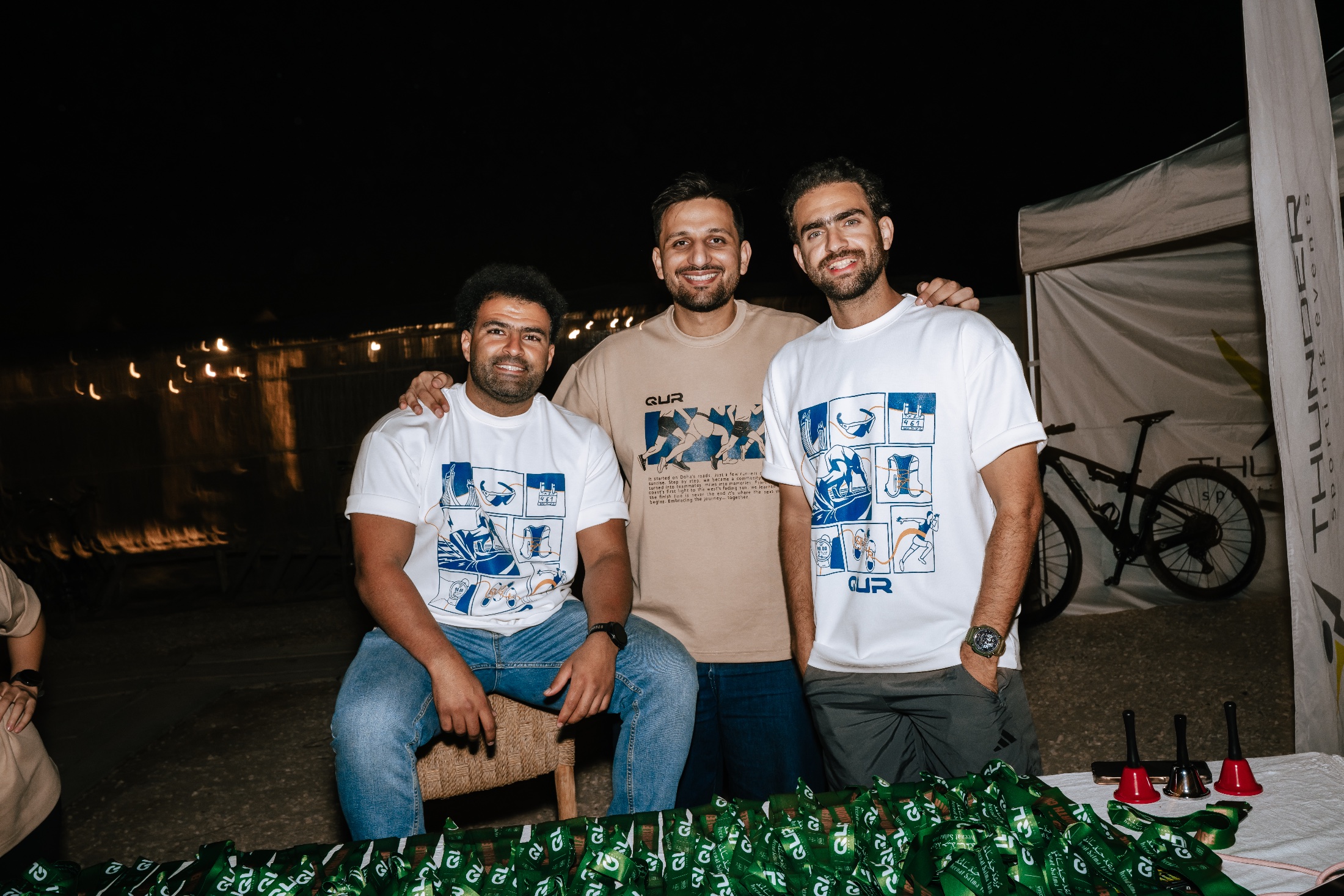
The North Challenge brought the first race against the clock to Qatar — two hours on a loop at Heenat Salma Farm, run in the dark, where the goal is distance covered rather than a finish line crossed.
The Cancer Awareness Run and, more recently, the HSBC Charity Run at Al Bidda Park go the other way: shorter distances, open to anyone, with registration fees going to Qatar Cancer Society.
Different distances, different reasons to show up. The same people setting up the water tables at 4am.
The Team Today
Abdu Ghanem's idea over breakfast is the reason any of this exists.
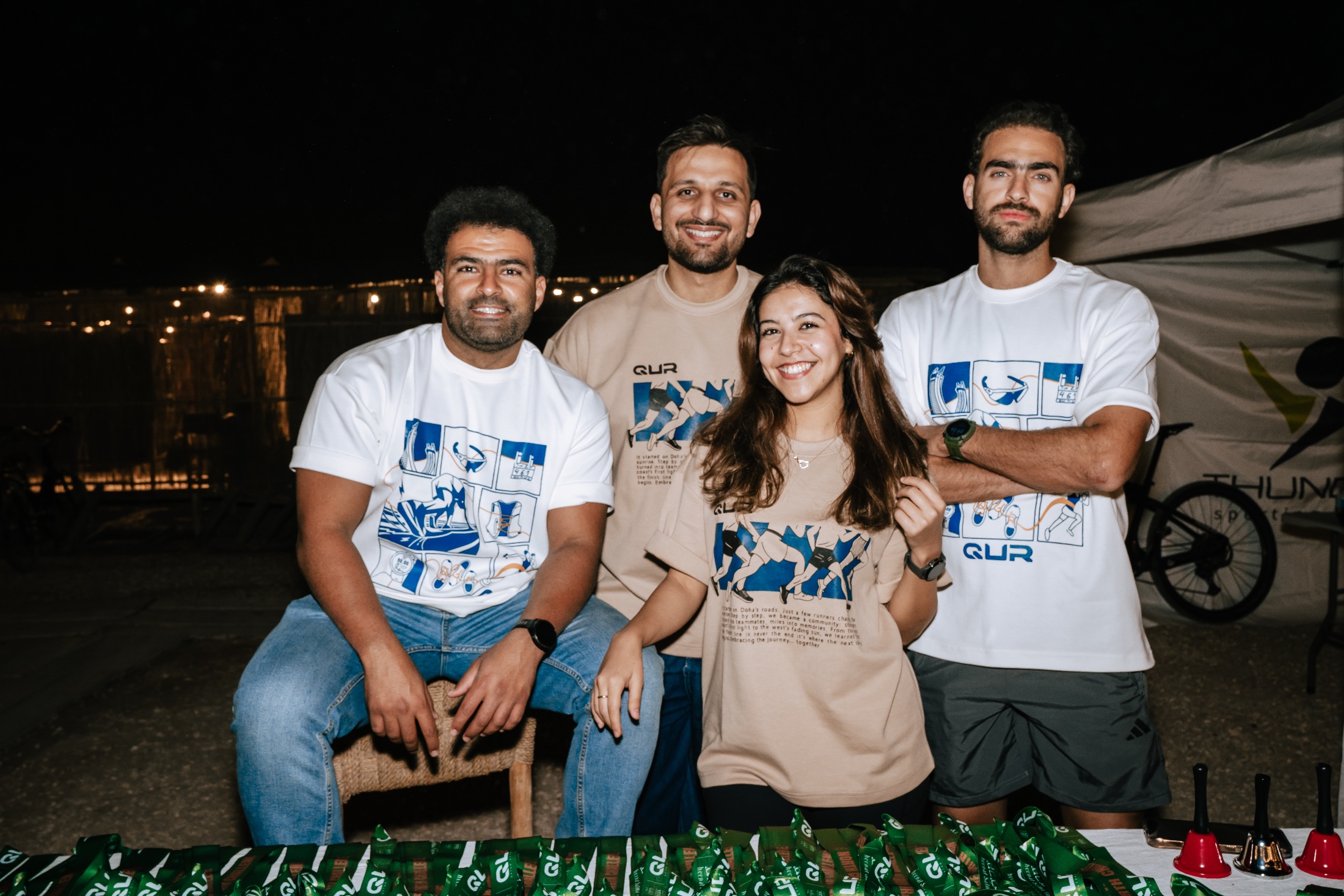
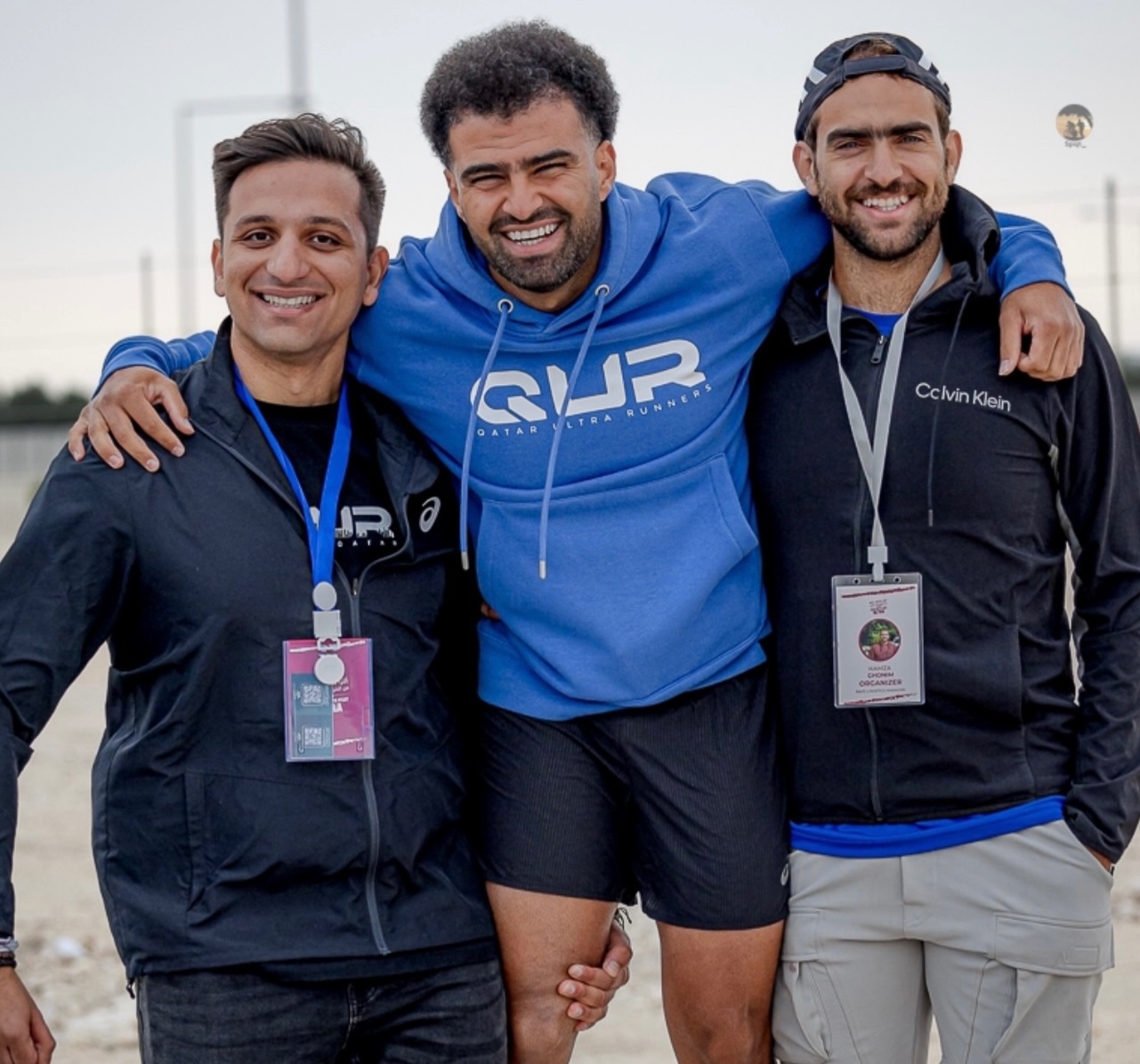
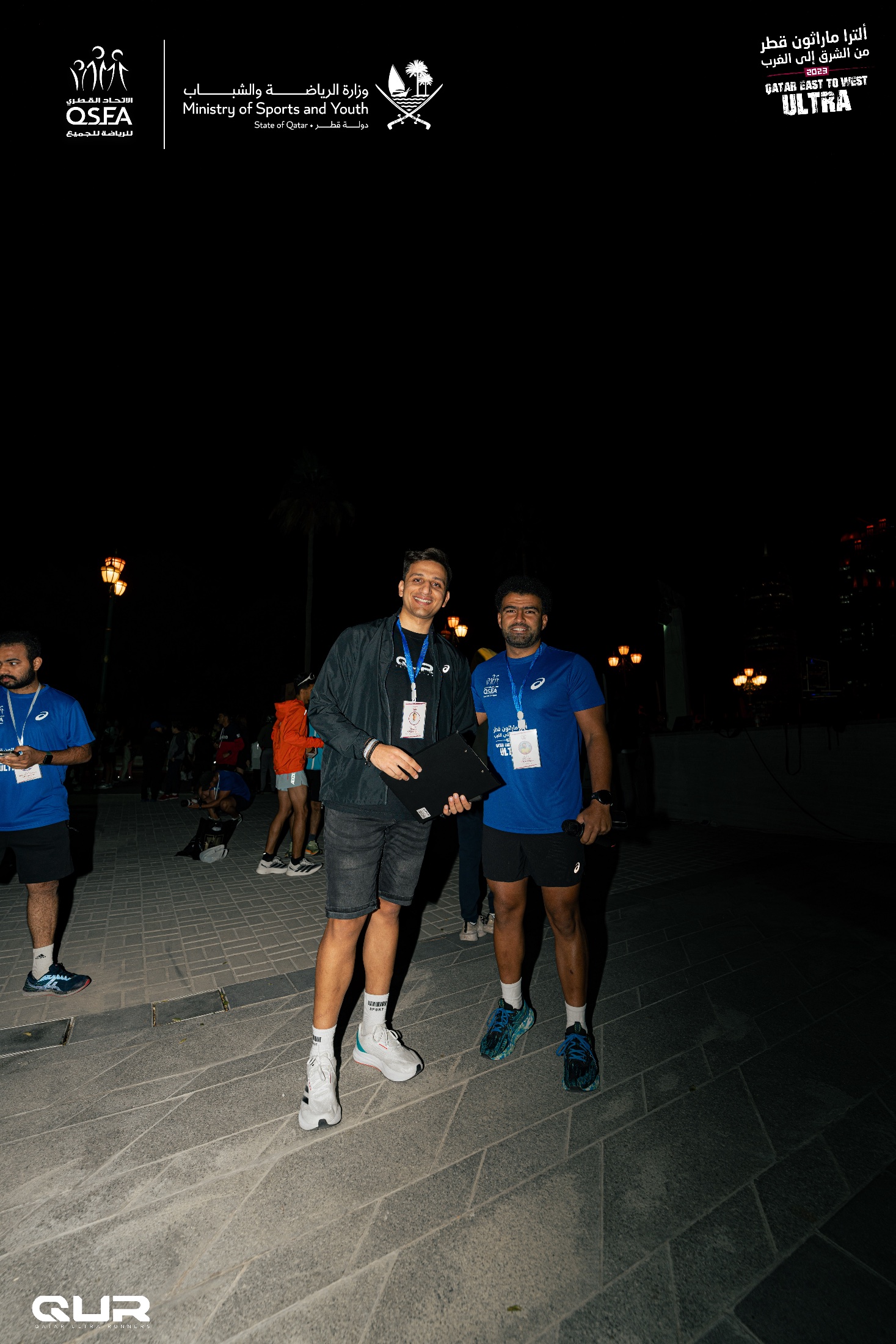
Qatar Ultra Runners is led today by three of the co-founders who were at that table. Islam Sallam, Co-Founder and Managing Director. Hesham Shaban, Co-Founder and Operations Director. Hamza Ghonim, Co-Founder and Logistics Director.
Around them is a team of volunteers, marshals and medics — some who have worked every edition since 2017, and plenty who have never run a race in their lives.